When Trains Beat Planes: European Short-Haul Routes
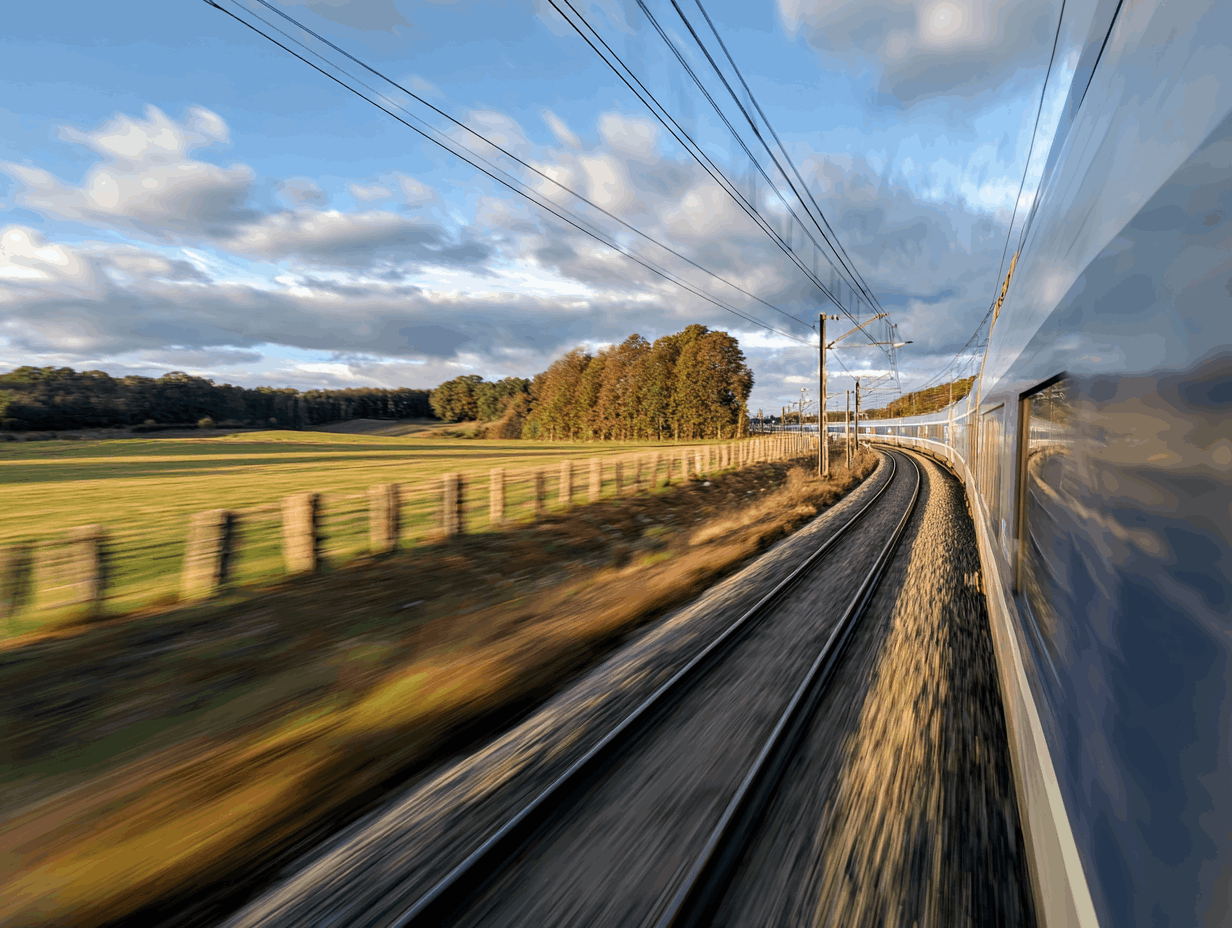
Sometimes the smartest way to travel short distances in Europe isn't jumping on a plane at all. For trips under about 500 km, high-speed trains often win hands down, especially if you value arriving relaxed instead of frazzled from security lines and boarding scrambles. We're talking routes where the train gets you there faster door-to-door, with way more comfort and zero airport nonsense. Let's look at why and when trains make more sense than flying.
Take London to Paris, classic example. The Eurostar whisks you from central London to central Paris in around two hours and fifteen minutes. Add the time to get to the airport, check in (you need to be there 90 minutes early at least), clear security, maybe grab a coffee, then land and trek into the city, and your total door-to-door flying time easily hits four to five hours. Train? You stroll to St Pancras maybe 30 minutes before departure, no liquids rules, bigger seats, free Wi-Fi that actually works most of the time, and you roll right into Gare du Nord smack in the middle of Paris. No lost luggage drama, no circling for a landing slot. If you're traveling light or even with a small suitcase, it's a no-brainer. Plus the views, countryside flashing by, sometimes you spot the Channel Tunnel entrance which feels kinda cool.
Another strong case is Paris to Brussels or Amsterdam. TGV or Thalys (they're pretty similar these days) covers Paris to Brussels in just over an hour, Amsterdam around three and a half. Flying? The airports are both outside the cities, so you burn extra time on transfers. And those short flights are the worst, tiny planes, constant boarding chaos, and often delayed because of air traffic around big hubs. Train wins on speed and sanity. You can even work properly or nap without someone kicking your seat.
Then there's Madrid to Barcelona, around 620 km but still worth mentioning because the AVE high-speed train does it in two and a half hours. Flying might shave 20 minutes in the air, but add the trip to Barajas or El Prat (both annoying to reach), security queues, and you're looking at similar or longer total time. The train station is right in the city center for both ends, you walk out and you're already where you want to be. Comfort level is night and day too, bigger seats, quiet cars if you pick them, decent food options onboard, space to stretch.
What about Germany or Italy? Frankfurt to Cologne is barely 180 km, ICE train does it in under an hour, flying would be ridiculous with airport times eating up your day. Or Rome to Florence, Frecciarossa hits it in about one hour twenty, super comfy, and you avoid the hassle of Fiumicino or Ciampino which are both pain to reach from central Rome.
So when does the train really beat the plane? Anytime the distance is under 500 km and cities are well connected by rail, which is most of Western Europe now. If you hate early mornings (flights often leave at dawn to make slots), trains run all day with frequent departures. If you're eco-minded, trains usually have lower emissions per passenger. And if traveling with family or friends, the social vibe on a train beats squished airplane seats. Even solo, it's nicer to stand up, walk to the bar car, grab a drink without turbulence warnings.
Of course it's not always perfect. Trains can get delayed by strikes or signal issues (looking at you, France sometimes), and peak times mean booking ahead or paying more. But for most short hops, the airport chaos, extra transfers, and that weird cramped feeling on budget flights make flying feel like overkill.
Bottom line, next time you're eyeing a route like London-Brussels, Paris-Amsterdam, Madrid-Valencia, check the train first. Often it's quicker overall, calmer, and just feels more civilized. You arrive ready to enjoy the city, not recovering from the journey.
